Foreword from the CEO – Third Edition
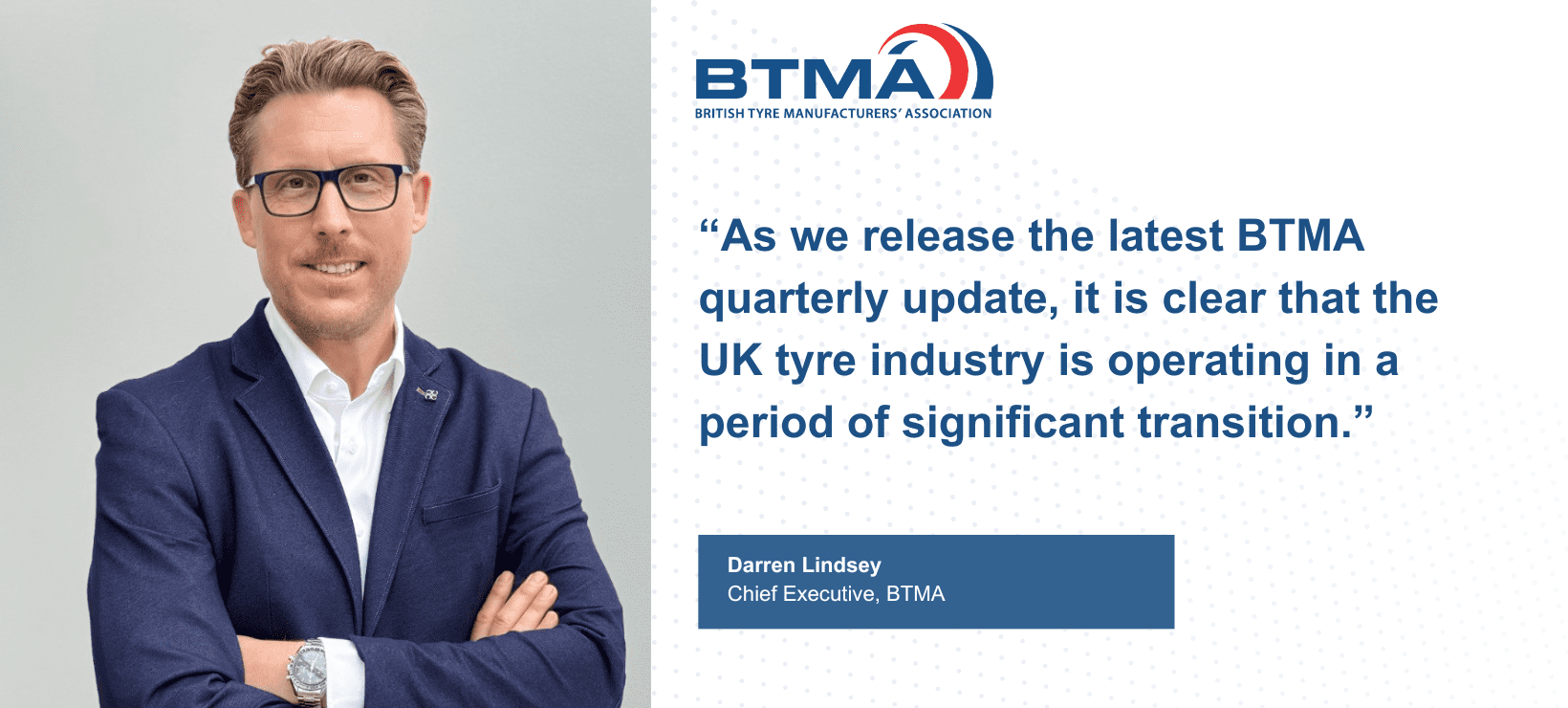
Darren Lindsey, Chief Executive, BTMA
As we release the latest BTMA quarterly update, it is clear that the UK tyre industry is operating in a period of significant transition. The early months of 2026 have brought a measure of stability to the replacement market, but they have also underscored the deeper structural changes reshaping mobility, consumer behaviour and supply chains.
Despite ongoing economic pressures, replacement demand has held firm. An ageing vehicle parc and steady levels of road use continue to underpin the market, even as households and businesses remain cautious in their spending. What we are seeing is a sector adjusting to a new normal one where inflation, although easing, still influences decisions, and where fleets are looking beyond upfront cost to focus on whole‑life value, operational uptime and data‑driven maintenance strategies.
At the same time, the shift toward electrified vehicles is becoming more visible in the aftermarket. With plug‑in vehicles now accounting for more than a third of new registrations, tyre requirements are evolving rapidly. Heavier vehicles, higher torque and stricter noise expectations are driving new patterns of wear and accelerating the need for specialised fitments. This is adding complexity for manufacturers, distributors and service providers, and it is reshaping the long‑term profile of the UK tyre market.
Global supply chains remain a defining influence. The UK continues to rely heavily on imported tyres, and early 2026 has seen a strong rebound in inbound volumes following last year’s declines. These shifts reflect broader trade dynamics across Asia and Europe and highlight the importance of robust regulatory enforcement and fair competition areas where BTMA continues to play an active role.
This quarter also marks an important development in our reporting: for the first time, we have incorporated MOT tyre failure and advisory data into our regular analysis. The findings are striking. Tyres account for around one in five MOT failures, and one in four vehicles receives a tyre‑related advisory notice. Battery electric vehicles show an even higher tyre failure rate around 6%, significantly above the fleet average. These insights offer a valuable window into real‑world tyre condition and safety trends across the UK’s ageing vehicle parc. By tracking this data going forward, we aim to support evidence‑based policymaking, strengthen consumer awareness and help the industry anticipate emerging needs as electrification accelerates.
Across all of this, BTMA’s focus remains clear: to support a safe, competitive and sustainable tyre industry. Whether through our work on regulation, our engagement with government on the evolving ZEV mandate, or our commitment to high‑quality market intelligence, we are determined to help the sector navigate change with confidence and responsibility.